Stockholm, Sweden
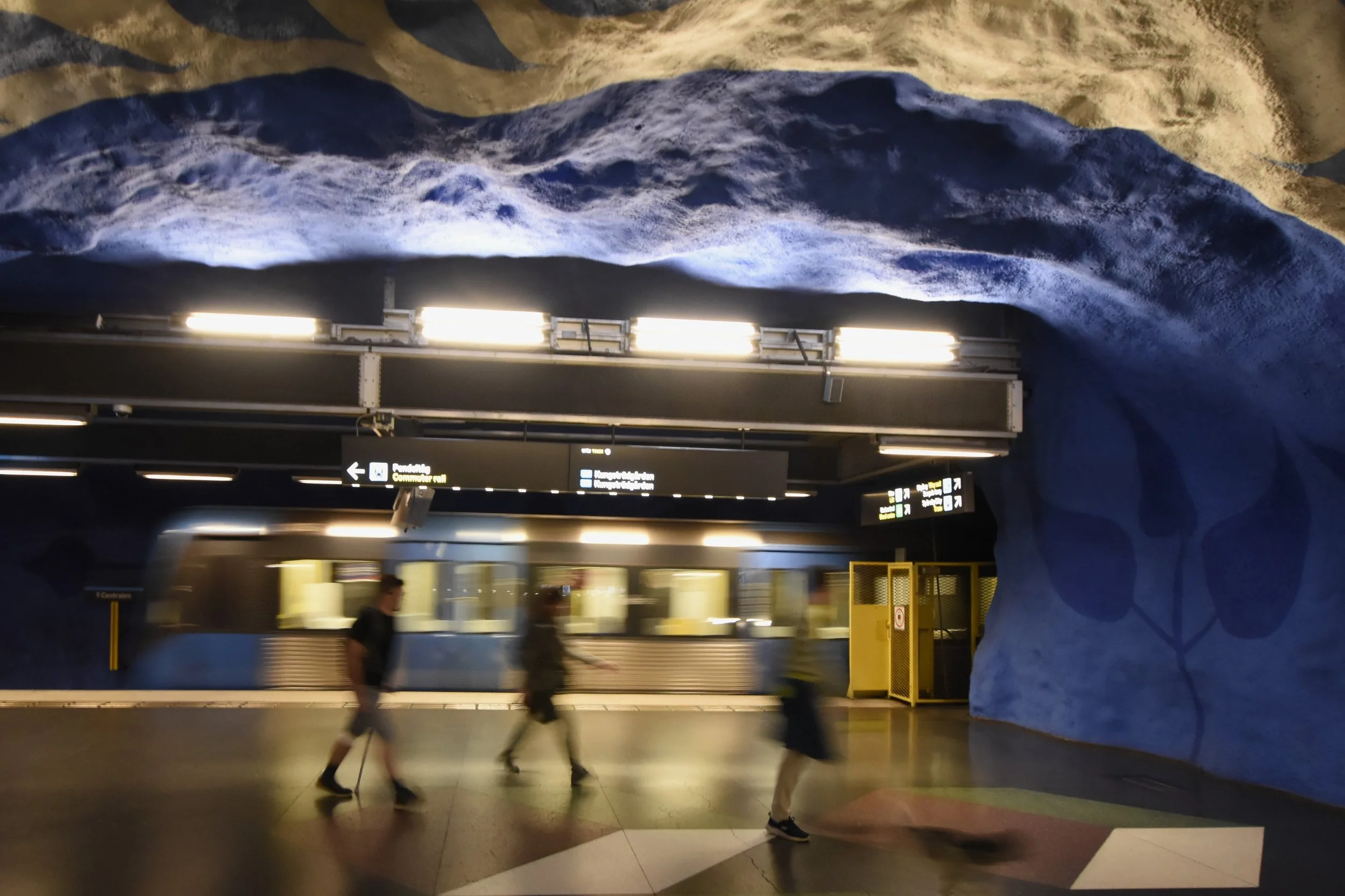
T-Centralen Station, Blue Line, Stockholm
Seven in the morning on a weekday, rush hour, I’m riding mass transit. My path takes me through the heart of Stockholm, and beyond, carried on three buses and a train for a total of 2 hours, but I don’t mind. Everything is clean and orderly and, unlike airplanes, built to accommodate humans taller than hobbits. The pervading polite quiet puts me at ease, enabling me to contemplate this post’s topic.
Stockholm is so picturesque and vibrant that I already feel myopic picking just one topic to encapsulate, a feeling only compounded as experiences mount. Also, so much about Sweeden has also already been said, for better and worse, from the delightful but easily overanalyzed Fika, to the noble but probably under analyzed Jantelagen, to America’s propagandized bogeyman. Ultimately, I attest, neither Saint Peter nor Satan stamped my passport on entry, so I bought a pair of socks featuring kanelbullar and decide to write about Stockholm’s mass-transit as a hopeful emblem instead.
By now I’m about 75 minutes into my journey. I greet my penultimate bus at a depot surrounded by office complexes, large, graphic letters affixed to the buildings, perhaps Stockholm’s more enterprising, modern sector. From here, I travel north-east along a highway. When I press the red button, the bus exits the highway, dropping me at a booth on the end of an off ramp, then accelerates through the on-ramp and rejoins the highway. Quite slick, that is, and novel for me. If I didn’t know better, I would feel like I’d just been dumped, but the last bus sign perches just a few hundred meters away, positioned on a cross-street over the highway. I trek my way over, following the asphalt walking path and concrete steps to catch my very last bus on this trip.
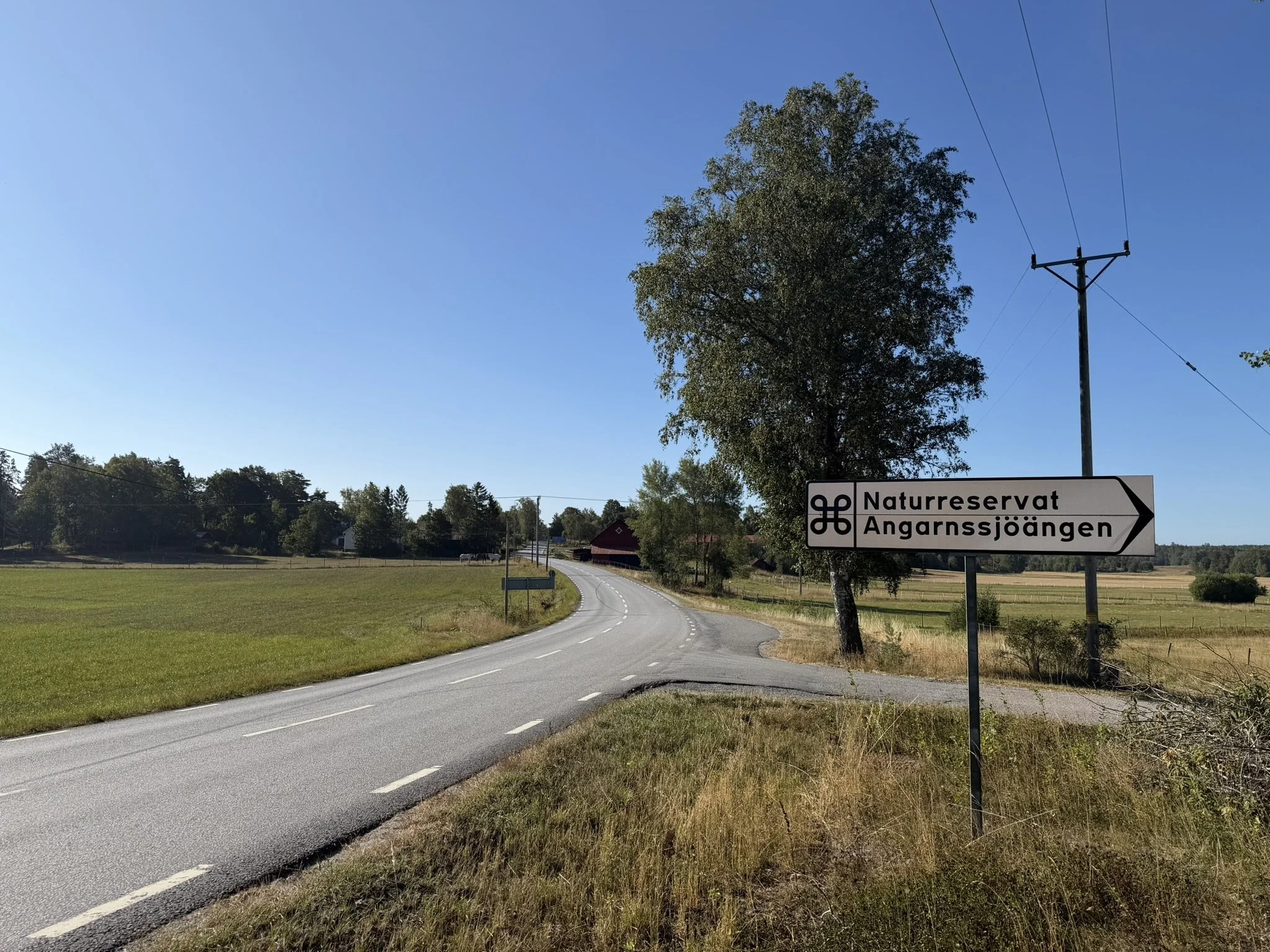
After just a few more stops, I step out onto dirt and grass. The breeze carries a faint scent of cow pie. In my pack, I carry a water bottle and some protein bars for an easy lunch, a pair of 12×60 binoculars and 600 mm lens. I’m hoping to see some creature I had never seen before, certainly something rare among cobblestone streets and souvenir shops. Point is, this is no tourist spot. Yet, somehow here I am, which is exciting and confusing all at once.
My mindset had always divided public transit by population-density. Sure, trains work great in Manhattan, but never in the American west, where I’m from. The distances are too far apart, the destinations too rural, travelers too few, the costs too high, the benefit too small. Why pay for such a thing? Yet here I am in a country larger than California literally facing a tractor as I stepping from the bus, albeit 30 km from Stockholm, but seemingly able to reach anywhere. How is it possible?
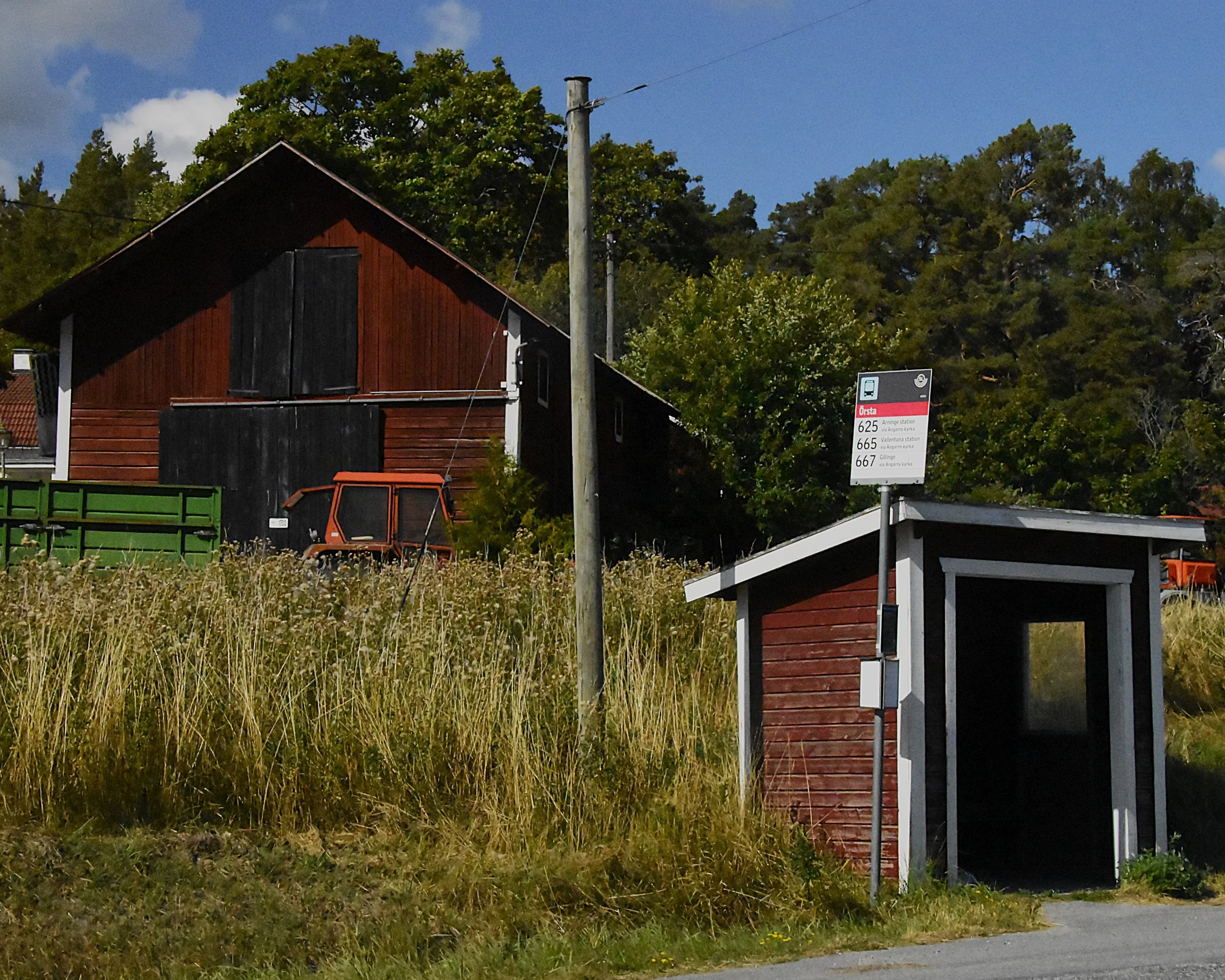
Truth is, I don’t really know how or why beyond the obvious. Not the work of trolls or magicians, this bus-stop and transit system were most likely designed, manufactured, implemented and maintained by humans. Yet in all seriousness, its every bit as magical for me, a foreigner trying to reach a distant nature preserve, and perhaps also for someone on a budget trying to reach a job, or someone retired trying to reach an important doctor’s visit. This is engineering magic, the kind which faces any problem, facing it honestly, and finding real solutions, considering all important factors.
Its this kind of magic that I found emblematic in Stockholm, from the Vasa ship’s resurrection, to Midwife licensing, to support for higher education, to pedestrian and bike paths in suburban areas, to drying racks in the shower room, to exhibits on climate change, and others—and of course to a world class public transit system. You know of what I speak if you ever succumbed to buying some other self-assembly furniture for price and then, when it broke, found yourself at Ikea instead.
No. Stockholm is not heaven, its streets lined with gold. No. Stockholm is not hell, its people roasting their own young over trash-can fires. But Stockholm is a beautiful place, and a place that gives me hope, hope born on the wings of the SL625. God speed.
If you are interested in learning more about equitable access to public transportation check out this study. “Public transport supply in rural Sweden: Examining distribution through the lens of equity” 10.1016/j.jrurstud.2025.103887.