
Isleworth, England
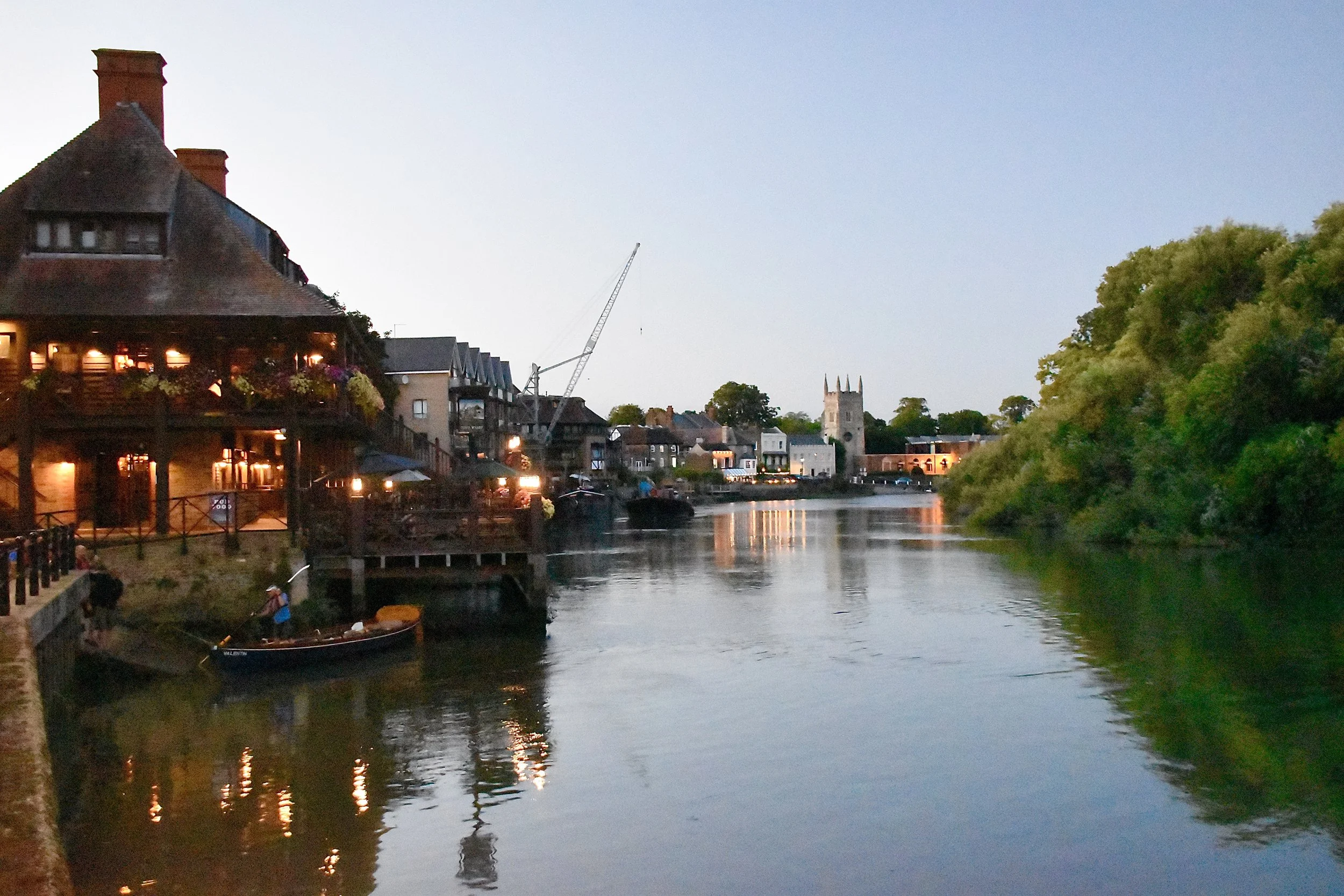
Old Isleworth and Thames
I hear the parakeets’ squawks from the trees across the river. Below me, Egyptian Geese sift through the mud for grubs like “mudlarks”searching for lost coins. The cheery robin whistles good morn. Overhead a jet planes queue up to land. And a sheepdog mix wags its tail hopefully, staring at me intently.
“Which way today,” I ask my eager companion.
Today’s path leads past the All Saints church tower, standing sentry, watching over the dead for some 600 years. Careless tree roots disturb their slumber, their markers strewed at odd angles, the graveyard appearing the scene of a minor earthquake. The stones are weathered but still readable with patience. One is dedicated to pandemic victims, the bubonic plague of 1665. From there, we enter the grounds of Syon house, a stately home of the Duke of Northumberland, built atop the ruins of a Swedish abbey, originally gifted by King Henry V in 1415, reportedly to win his war with France as much as to win favor with the all-mighty.
Such history sits within grasp in Isleworth, and each twisting, turning, obscure path beckons, encouraging exploration and reflection. Another path leads to the ruins of Richmond palace, and another down Mill Platt Road and an alms house.
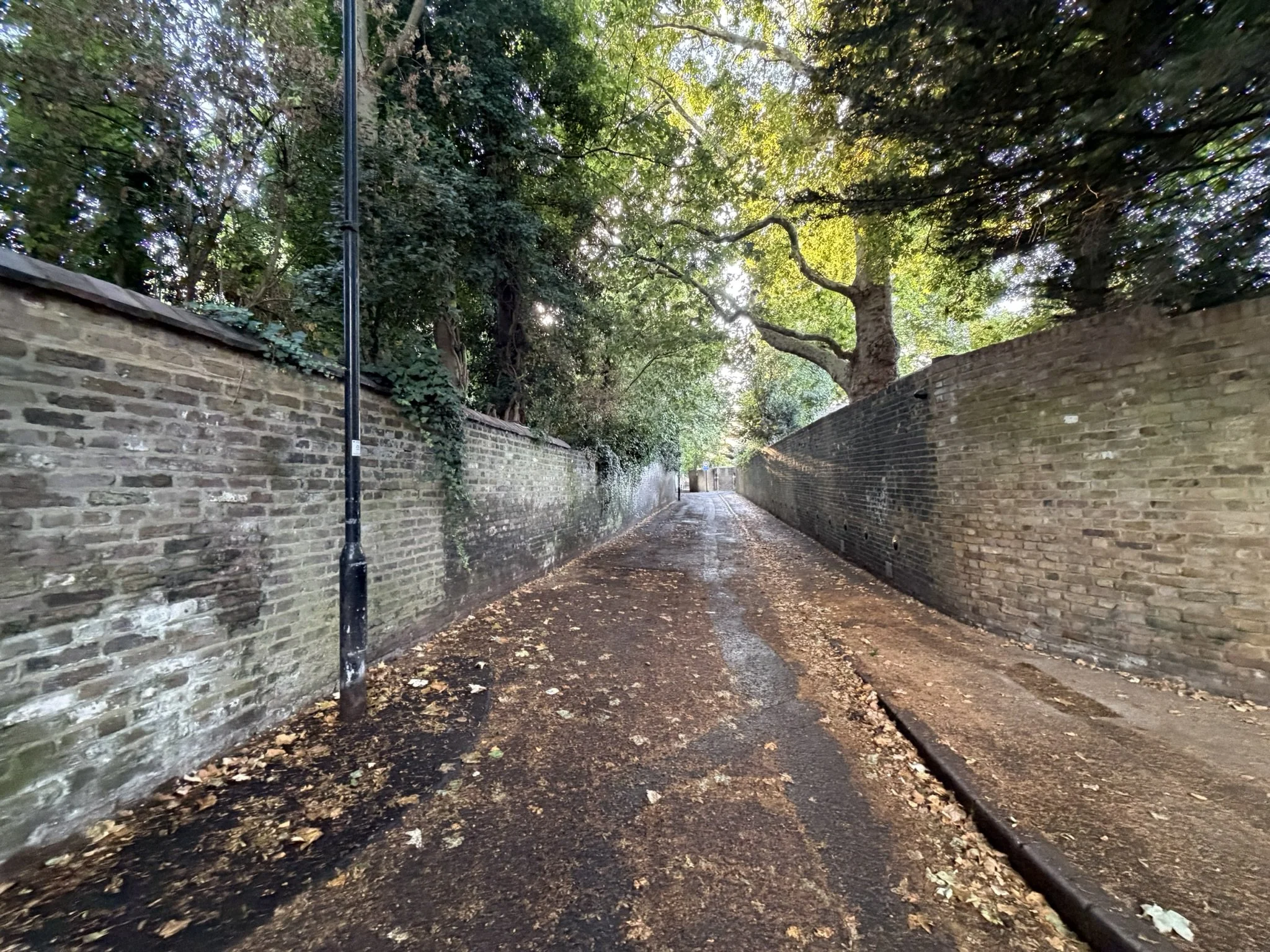
Mill Platt Road
Archeological gravitas creates a mood, a sense of place. After all, what would New York City be without its skyscrapers. But here in England I begin to wonder if these old stones also create a sense of people, community, as if part of being “English” means being connected to the past and to the future, a characteristic cultured while walking—rather than driving—as walking allows one to savor. Indeed, in America, when driving to the Walmart I barely see anything around me except the stop lights and cars. I get there as fast as I can. I run in to buy the groceries. I get home as fast as I can, usually complaining about some jerk on the road. Only on returning home after years do I notice that the old movie theatre is now a bike shop, and so forth, and I continue driving on eager to make good time. I never wondered if in building the Walmart, someone bulldozed a castle.
Historically, Isleworth has been a crossroads perhaps owing to shifting tides. Twice a day the oceans draws out the Thames, exposing “dry” land to walk across, which still happens to this day. Perhaps owing to such flexible navigation, ancient celts and Romans set up camps near here. But perhaps this cozy, historic village in one of the worlds largest cities, London, now directs us to build a different legacy. In Isleworth, I walked the dog, sure, but also walked to the grocer, walked to the pub at nights, walked through the parks and twisted streets, and I started taking notice.